
The best deck lighting ideas do more than brighten the space: they shape its atmosphere, from softly lit stairs to color-changing LEDs for evenings outdoors. The right combination balances visibility, style, and the way you use your deck.
It’s natural to begin with practical lighting for steps and pathways, then consider how railing lights, post caps, or rope lighting can extend the design. Smart LEDs add another option, allowing color to become part of the setting rather than a fixed detail.
This guide compares pathway and stair lights, railing and post-cap options, rope lighting, solar caps, and color-changing smart LEDs. Learn how each option affects your deck’s look and function, and what to consider when planning a coordinated lighting design.
Key Takeaways
- Prioritize pathway and stair lighting to make transitions across the deck easier to see after dark.
- Combine railing, post cap, or rope lighting to add layered illumination while keeping the design cohesive.
- Consider how sunlight reaches the deck when choosing solar post cap lights for the space.
- Plan color-changing smart LEDs alongside the deck’s layout and intended use for a coordinated lighting design.
Pathway lighting for decks and stairs
Pathway lighting guides movement across a deck, from an exterior door to seating or stairs. Start with the route people use most, then place lights along its edges and at changes in level. For example, a deck with steps to a garden needs clear illumination at the stair transition, not just near the door. A balanced set of deck lighting ideas keeps the route easy to follow while maintaining a calm nighttime atmosphere. Low, directed fixtures can mark the way without overwhelming the space.
Stair riser lights sit on the vertical face of each step, helping distinguish one tread from the next. Recessed fixtures can also be installed in nearby deck boards or stair surfaces for a discreet profile. Placement matters: a light aimed at the walking surface creates a different effect from one shining outward. During planning, the installer maps the stairs, marks where each step begins, and coordinates fixture positions with the deck’s construction. This creates a consistent lighting pattern across the staircase.
Consider a two-level deck where guests move between a dining area and a lower patio. The situation calls for a visible transition; the action is to align riser or recessed lights with the stair route; the result is a more defined passage after dark. A solar step-light listing specifies 33 focused LEDs per light and a six-pack. That example offers a compact option for marking steps, while the final layout should suit the actual stair width and deck design.
For a broader path, pathway fixtures can be spaced along the route and across deck areas, including stairs. A recessed deck-light listing specifies 30 lights and a 1.22-inch size; a low-voltage recessed kit is listed as a 30-pack. These are product examples, not universal layout rules. The installer considers the route, stair geometry, fixture visibility, and desired light distribution before setting locations. Subtle illumination helps define edges and circulation without turning the deck into a field of bright spotlights.
Railing, post cap, and rope lighting
Railing lights define deck edges without filling the space with glare. On a dining deck, discreet fixtures along selected rail sections can outline the perimeter while keeping attention on the table. Post-cap lights add illumination at railing corners and transitions. Repeating the same fixture style across visible posts creates a deliberate line around the deck instead of scattered points.
Low-voltage LED post-cap lights suit designs that call for connected lighting. Their placement can be planned around the railing layout, wiring route, and other fixtures. For example, matching caps along a long stair-side rail can mark its edge. Post-cap lights can also help define seating boundaries. Because the light source sits above the post, its pattern differs from recessed stair lighting.
Rope lighting follows a longer line, such as beneath a railing or along a deck border. In a narrow passage between a door and stairs, a continuous strip can guide movement. Plan its route around rail supports and deck features to keep the line consistent and avoid awkward breaks at corners. Rope lighting can complement post caps, but each should have a distinct role.
Are solar, low-voltage, or line-voltage deck lights best? Solar suits locations with adequate daylight exposure, while low-voltage systems support connected fixture layouts. Line-voltage lighting may suit a broader electrical plan, depending on the deck design. Choose based on fixture placement, wiring needs, and how you use the deck.
For a layered example, post caps can define the perimeter, while rope lighting marks a seating edge. The installer coordinates both with stair and pathway fixtures, so bright points do not compete. Fixture style, rail material, and the intended nighttime atmosphere shape the final arrangement. A clear deck lighting plan can align these choices with the deck’s structure and daily use.
Solar post cap lights
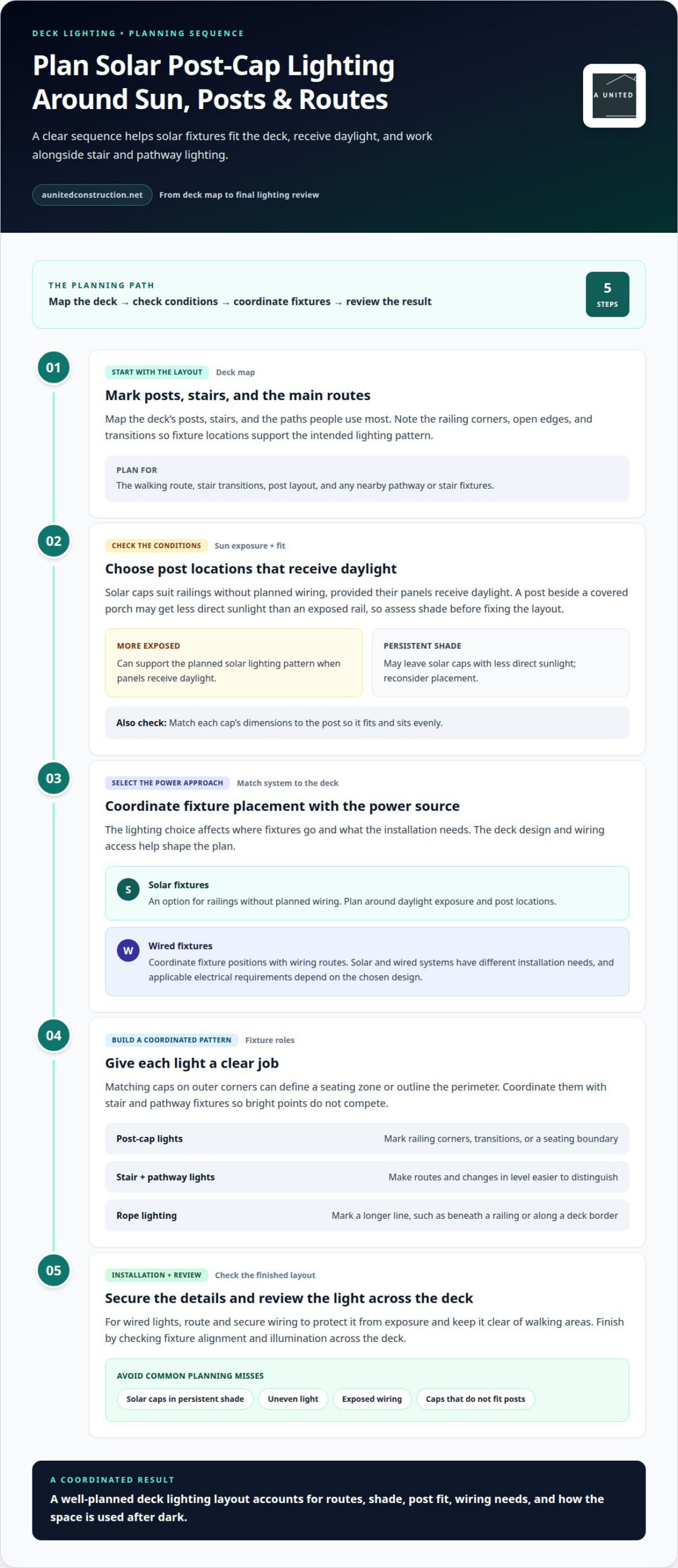
Solar post cap lights suit railings without planned wiring. For a deck with exposed corner posts, a professional can place matching caps at those points. The result outlines the perimeter while keeping fixtures above the walking surface. Solar deck lights also work along open edges, provided their panels receive daylight. A solar ground-light listing offers a 12-pack, one example of a grouped fixture format.
Placement shapes the result. A shaded post beside a covered porch may get less direct sunlight than an exposed rail. Assess the deck’s shade and post layout, then position caps to support the intended lighting pattern. For example, matching caps on the outer corners can define a seating zone without adding lights to every post.
Outdoor deck lighting must meet the electrical requirements for its location and system. Solar fixtures and wired systems have different installation needs, so the applicable requirements depend on the chosen design.
The project scope depends on the number of fixtures, wiring access, post construction, and whether the plan uses solar or wired lights.
A professional starts by mapping the deck’s posts, stairs, and main routes. Then the installer matches fixture placement to the desired effect and available power source. For solar lighting, the plan accounts for sun exposure; for wired lighting, it coordinates fixture positions with wiring routes. A final review checks alignment and illumination across the deck.
Choose fixtures designed for exterior conditions, and coordinate their finish and dimensions with the posts. For wired lights, route and secure wiring to protect it from exposure and keep it clear of walking areas. A cap that does not fit its post can look uneven, so check post dimensions when selecting fixtures.
Common mistakes include placing solar caps in persistent shade, creating uneven light, or leaving wiring exposed. A professional avoids these issues by reviewing shade, post fit, wire routes, and fixture alignment before installation. That planning helps the lighting work as a coordinated part of the deck.
Color-changing smart LED deck lights
Color-changing LEDs add a deliberate accent to deck design, shifting the mood from a quiet dinner to a lively gathering. For example, lighting around a seating area can add a subtle layer of color, while stair and pathway lights remain focused on visibility. Give each fixture a clear role. Too many competing colors can distract from the deck’s architecture and make walkways harder to distinguish.
What brightness and color temperature work best for deck lighting? Choose brightness according to the area and its purpose, with gentler light for seating and clearer illumination along routes. A described outdoor bulb provides 100 lumens and adjustable 2700K warm-white lighting, a useful reference for a softer fixed-color layer.
Plan the arrangement before choosing color effects. First, identify the deck’s main zones, such as dining, lounging, and stairs. Next, decide which areas benefit from changing color and which need consistent white light. Then coordinate fixture positions and finishes with the railing, posts, and deck surfaces. This sequence keeps the design coherent and ensures decorative lighting does not replace practical illumination.
Consider a deck used for both family dinners and evening gatherings. The situation calls for adaptable ambience; the design can reserve color-changing lights for the seating perimeter and retain steady light near steps. The result is a distinct social zone without making every part of the deck change color. Described string lights offer adjustable white temperatures from 1000K to 10000K and 150 lumens per bulb. These figures illustrate options for adjustable white light, not a universal setting for every deck.
Keep the palette restrained. A single color accent can complement furniture or nearby planting, while consistent white light preserves visibility. Fixture placement, brightness, and the deck’s intended uses should guide the final composition. For a coordinated design that integrates lighting with the structure, plan your deck remodeling project with professional guidance.
A United Construction: Deck Remodeling
A United Construction can incorporate deck lighting choices into a coordinated remodeling plan. If you’re updating your deck, consider lighting alongside its layout, stairs, railings, and intended use. This connects practical illumination with the finished design instead of treating fixtures as an unrelated addition.
When remodeling a deck, plan around where you gather, how people move between levels, and which details deserve emphasis. Pathway lights can support circulation, while post caps or color-changing LEDs can shape the atmosphere. The right approach depends on your deck and how your household uses it.
For a deck update that includes lighting in the design, contact A United Construction to discuss your project.
Plan the deck around evenings ahead
Lighting decisions can be part of a larger vision for how your outdoor space will serve you over time. Consider how the deck connects to the home, where you expect to gather, and whether its layout may change with future updates. That perspective helps you make choices that feel intentional today and remain useful as your routines evolve.
The strongest deck lighting ideas reflect how you want the space to function, not just which fixtures you like. During a deck update, consider lighting alongside circulation, railing details, and the connection between indoor and outdoor living areas. Addressing these elements together creates a cohesive plan and keeps illumination from becoming an afterthought. It also clarifies which design choices matter most to your household.
If you’re ready to discuss how your outdoor space could better support evenings at home, A United Construction can help you plan a deck remodeling project. Contact A United Construction to discuss your plans. Thoughtful planning is a sound first step toward a deck that feels welcoming and works beautifully for your household.
Frequently Asked Questions
What are popular deck lighting ideas and styles?
Popular styles pair understated fixtures with a focal detail, such as warm-white lighting around a dining area and a restrained color accent near lounge seating. In Fairfax or Alexandria, coordinated finishes can complement a traditional home’s exterior. In Arlington, a clean, linear arrangement may suit a contemporary deck. Choose a style that relates to the home’s architecture and how you use the space.
What types of outdoor deck lights are available?
Outdoor options include recessed fixtures, stair lights, railing lights, post caps, rope lighting, solar ground lights, string lights, and color-changing LEDs. Each serves a different role: recessed fixtures keep surfaces visually uncluttered, while string lights can define a dining zone. For homes in Burke, Springfield, or McLean, also match fixtures to the deck materials and surrounding exterior design.
Where should deck lights be placed for safety and ambiance?
Prioritize transitions, route intersections, and places where furniture changes the walking path. A light near a door can help orient people stepping outside; lighting near a gate or grill can support those activities. For decks in Reston, Chantilly, or Herndon, consider how outdoor living areas connect to the yard, not just the deck perimeter.
How can deck lighting be controlled with timers, dimmers, or smart systems?
Control options depend on the lighting system. Timers can set operating periods, while compatible dimmers adjust brightness for dining or quieter evenings. Smart controls offer another way to manage compatible lights, but the fixtures and control system must work together. Some complete deck lighting kits include timers. A coordinated plan keeps controls easy to use and avoids separate, confusing routines.

